

As an Amazon Associate I earn from qualifying purchases. This post may contain affiliate links.
One of the easiest ways to make the idea of a classroom provocation feel intimidating is to search for “classroom provocations” online.
Suddenly there are beautifully arranged tables, specialty materials, coordinated loose parts and spaces that look as though someone had an entire afternoon to prepare them.
Most teachers do not have that afternoon.
More importantly, I am not convinced that a meaningful provocation depends on having one.
A provocation, at its most useful, gives students something worth noticing. It creates just enough tension, surprise, ambiguity or possibility that a learner has a reason to move closer and begin thinking.
Sometimes that requires almost nothing new.
I wrote recently about what a tiny SoHo shop reminded me about the environment itself becoming a provocation. The same idea applies at a much smaller scale inside the classroom. Often it is not the object itself that creates curiosity; it is the way we position it, withhold something, connect it to something unexpected or simply resist explaining it too quickly.
Here are five ways I would do that with materials already in the room.

Sometimes the most interesting provocations begin with things we already have—or things we notice on the way through the city.
1. Put two familiar things together that normally do not belong together
Instead of searching for a new object, start with two things students already recognize and change the relationship between them.
Place a ruler beside a leaf.
Set a map beside a piece of fruit.
Put a photograph of a skyscraper next to a bird’s nest.
Leave a dictionary open beside a collection of buttons.
The power is in the juxtaposition. Students begin wondering why the objects have been paired, what connection they might share and whether there is a relationship they have not yet noticed.
In a concept-based classroom, those connections can become far more interesting than a teacher-provided question because students have to construct the bridge themselves.
For a NYC classroom, the city gives us an almost endless source of material. A MetroCard or subway map fragment, a photograph of scaffolding, a takeout menu, a museum ticket, a building facade or a piece of packaging from a neighborhood market can sit beside something from the classroom and immediately shift how both are seen.
2. Change the scale
We become less curious about things when we think we already know what they are.
Scale can disrupt that familiarity.
Take a close-up photograph of something ordinary — tree bark, a zipper, a pencil shaving, a section of a painting, the texture of a sneaker — and enlarge it until it becomes difficult to identify.
Do not label it.
Do not ask, “What is this?”
Simply place it somewhere students will encounter it.
A magnified fragment creates a different kind of thinking because students have to attend to pattern, texture, evidence and possibility rather than rush toward an answer.
A few magnifying glasses can extend this beautifully when students begin finding their own ordinary objects that look completely different up close.

Provocations do not need to be elaborate. A few thoughtfully chosen materials can be enough to open up thinking.
3. Reveal only part of the story
Teachers often work hard to give students enough context. Sometimes inquiry benefits from doing the opposite.
Cover part of a photograph.
Display only one sentence from a longer text.
Put three objects from a collection on a tray and leave the rest hidden.
Show the beginning and ending of a data set but not the middle.
When something is incomplete, the learner has intellectual work to do.
What might be missing? What happened before this? What would make this information make sense?
I particularly like this because it moves a provocation away from decoration and toward reasoning. Students are not simply reacting to something beautiful; they are making claims based on partial evidence.
4. Use student thinking as the next provocation
Some of the richest provocations are already sitting in notebooks, on sticky notes or inside conversations from the day before.
Take an interesting student question and place it on the board without the student’s name.
Photograph two different solutions to the same math problem.
Display three contrasting sketches from a science observation.
Put two pieces of student thinking beside one another and ask nothing at first.
This is also one of the simplest ways to communicate that students’ ideas are not just products teachers collect and assess. They can become material for the community’s next round of thinking.
It creates a classroom where inquiry develops from what learners have already noticed rather than resetting every morning with a new teacher-created prompt.
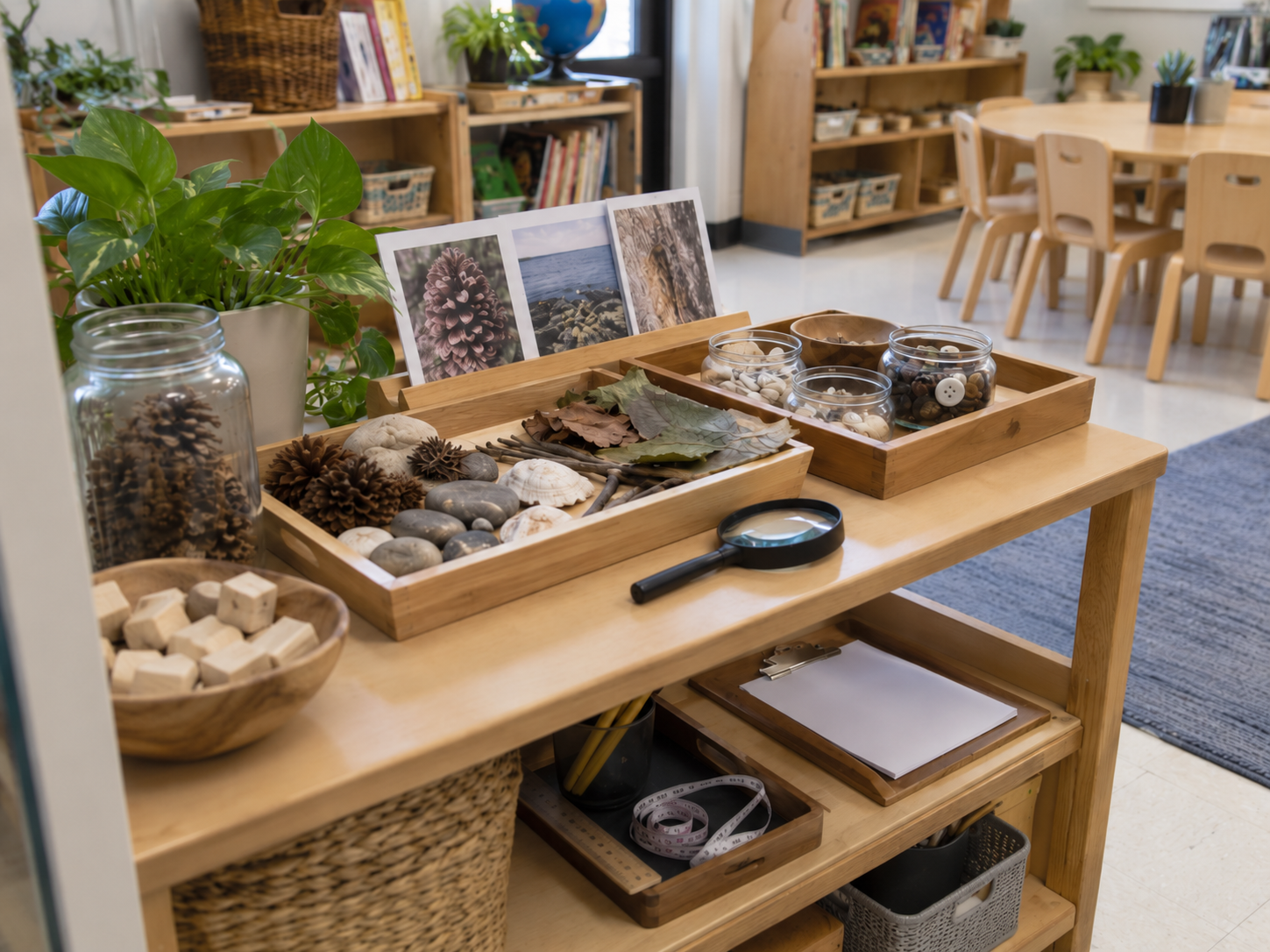
A small provocation table can invite observation, comparison, and conversation without requiring a large classroom overhaul.
5. Let the city become part of the classroom
For those of us teaching in New York City, this one feels particularly important.
Students walk through an extraordinarily complex learning environment every day.
Architecture, languages, public art, construction, transportation, storefronts, parks, signage, shadows between buildings, street trees and the constant movement of people all contain material worth studying.
A five-minute neighborhood walk can generate photographs that become provocations for weeks.
What patterns do we keep seeing in buildings?
Why is one street louder than another?
Who is a public space designed for?
Why do some storefronts make us want to enter?
What changes when a neighborhood is viewed from a child’s height rather than an adult’s?
The city does not have to become a field trip every time. Sometimes it simply needs to become visible inside the classroom.
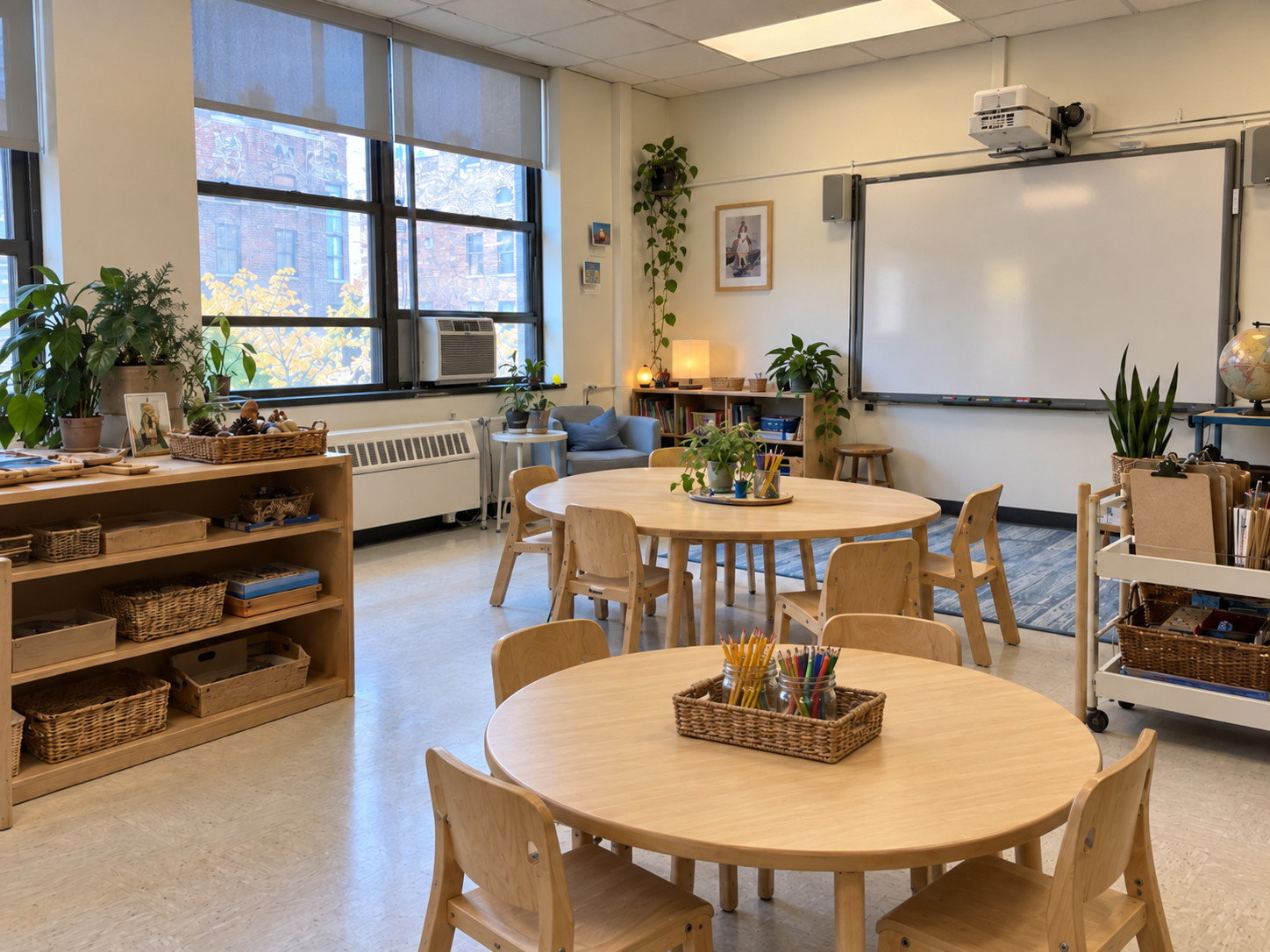
An inquiry-friendly classroom does not need to be elaborate. It needs materials, access, and invitations that make students want to look more closely
The question I use before adding anything new
When I am thinking about a classroom provocation, I find one question more useful than “What should I put out?”
What kind of thinking am I hoping this arrangement might make possible?
Not what answer do I want.
Not what activity will students complete.
What might this invite them to notice, connect, question, compare, revise or imagine?
That question often leads to a much simpler provocation — and usually a better one.
It also keeps us from turning inquiry into another form of classroom consumption, where every new idea requires another purchase.
Sometimes the most powerful shift is not adding something.
It is helping students see something familiar differently.
If you are thinking more broadly about the role of the room itself, you may also like When the Environment Becomes the Provocation and What Makes a PYP Classroom Feel Like a Place for Inquiry?.